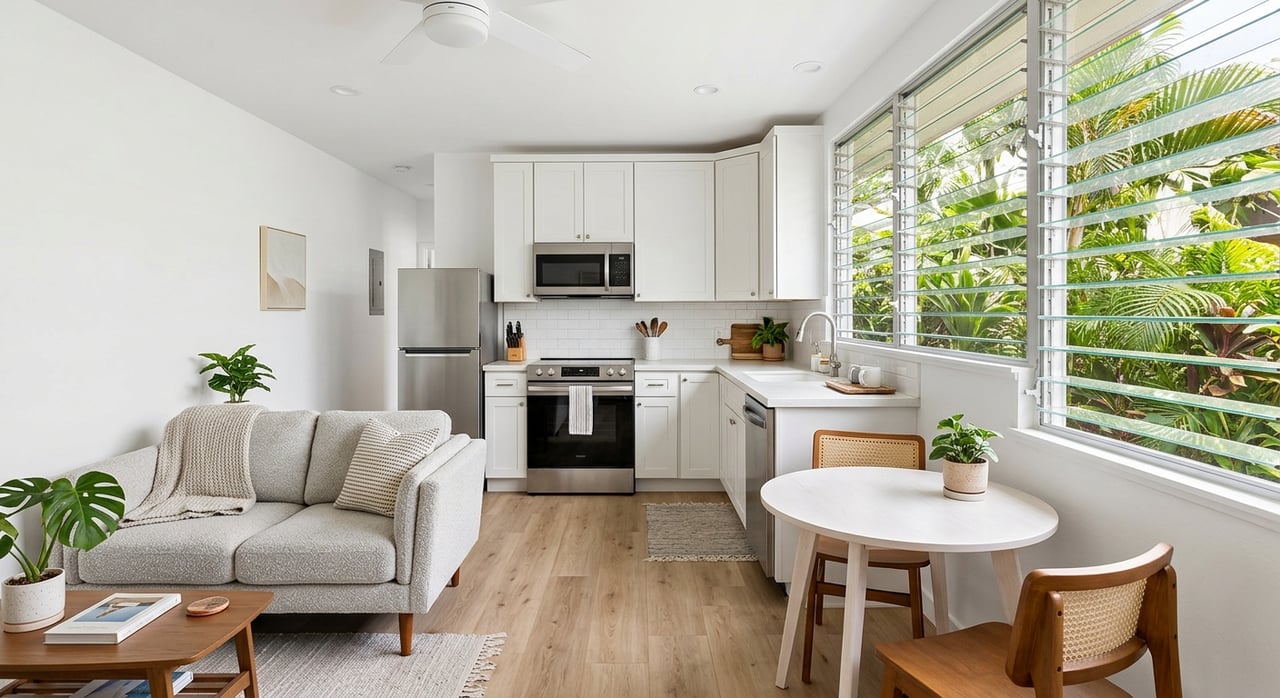
Looking beyond Honolulu’s core can open up a very different kind of rental investment conversation. If you are comparing Leeward and Central Oʻahu for portfolio growth, you are not just weighing price points. You are also weighing product type, transit access, carrying costs, and the rules that shape how a property can actually be used. This guide will help you evaluate those moving parts in a practical way so you can make a more informed decision. Let’s dive in.
Why Leeward and Central Oʻahu Matter
Leeward and Central Oʻahu are often discussed together, but they function as distinct submarkets. Oʻahu is commonly viewed in regions that include Central Oʻahu and the Leeward Coast, and each area has its own economic patterns, housing stock, and development story. For a rental portfolio, that means you should avoid treating these areas as a simple extension of urban Honolulu.
That distinction matters because your strategy may change depending on where you buy. In broad terms, Leeward areas can offer a growth-and-transit narrative tied to the west side corridor, while Central Oʻahu may appeal for its established residential base and more varied rent bands. When you underwrite either area, local context should drive your assumptions.
Rental Portfolio Lens for Leeward Estates
The target area sits within a broader part of Oʻahu where investors often compare nearby Leeward and Central submarkets side by side. That makes it useful to look beyond a single neighborhood boundary and assess the larger corridors influencing tenant demand, access, and competition.
For many investors, the appeal is straightforward. These areas can offer rents that support long-term holding strategies without requiring a core Honolulu purchase price. At the same time, they still connect to larger island employment and transportation patterns, which can strengthen the long-term rental case.
Price Signals Across Nearby Submarkets
Recent local MLS snapshots point to an active mix of detached homes and condos in Ewa Plain, Mililani, and Pearl City-Aiea. In the February 2026 update, median single-family prices were reported at $999,000 in Ewa Plain, $1,042,900 in Mililani, and $1,227,500 in Pearl City-Aiea. Condo median prices were reported at $590,000, $525,000, and $427,500 respectively.
For you as an investor, those numbers are useful because they show a mixed-product environment. You may be able to choose between condo or townhome inventory with lower exterior maintenance obligations, or detached homes with more land and potentially different tenant appeal. The right fit depends on your budget, management style, and yield targets.
Islandwide, Honolulu Board of REALTORS® year-end 2025 data reported median resale prices of $1,139,000 for single-family homes and $507,250 for condos. That wider backdrop helps frame Leeward and Central Oʻahu as areas where product choice can be a major part of the investment decision, not just neighborhood selection.
Rent Levels and Tenant Demand
Rentability is one of the clearest reasons investors study these corridors. Realtor.com’s March 2026 Oʻahu market page reported an islandwide median rental price of $3,052. It also reported median rents of $3,200 in Greater ʻEwa, $3,100 in Mililani-Waipio-Melemanu, $2,595 in Aiea, and $1,875 in Central Oʻahu.
Those figures suggest that several nearby submarkets support rents around the $3,000 level, while others come in lower and may offer a different cost-to-rent equation. If you are comparing opportunities across Leeward and Central Oʻahu, that variation can be helpful. It gives you room to match your acquisition strategy to the type of tenant and monthly target you want to pursue.
County-level housing data also supports the importance of rent and affordability analysis. Honolulu County reports a median gross rent of $2,083 and median monthly owner costs with a mortgage of $3,111. In practical terms, many renters are making decisions based on monthly payment, commute, and convenience, so your underwriting should stay grounded in real tenant behavior rather than headline pricing alone.
Transit Access Can Shape Long-Term Appeal
Transportation is a real portfolio factor in this part of Oʻahu. Skyline is now operating from East Kapolei to Kalihi Transit Center, with 19 stations along an 18.9-mile corridor. According to HART, the system is intended to improve transit links in the Kapolei-to-UH Mānoa corridor and provide an alternative to private-car travel.
For rental owners, transit does not guarantee higher performance, but it can influence how tenants evaluate location. Honolulu County’s mean travel time to work is 26.7 minutes, which reinforces why access still matters. Properties with practical connections to jobs, services, and transportation options may have an advantage when renters compare similar listings.
This is one reason Leeward Oʻahu gets attention from investors who are thinking beyond today’s rent roll. Infrastructure can change how a corridor functions over time. That does not remove risk, but it does support a more nuanced long-term view.
Condo Versus Detached: Which Fits Your Portfolio?
One of the most useful takeaways from the local data is that you are not limited to a single asset type. In these corridors, condos, townhomes, and detached houses all play a role. That gives you flexibility, but it also means you need to compare more than purchase price.
Here is a simple way to frame it:
| Asset Type | Potential Appeal | Key Watchouts |
|---|---|---|
| Condo or townhome | Lower exterior maintenance burden, often lower entry price | HOA dues, insurance-related fee increases, house rules |
| Detached home | More land, different tenant appeal, greater control over the structure | Higher maintenance responsibility, more repair exposure |
This comparison is especially important on Oʻahu because carrying costs can change the math quickly. HBR reported that rising condo insurance premiums increased monthly fees and helped push condo inventory higher in 2025. That means gross rent alone is not enough. You need to model net performance carefully.
Carrying Costs Deserve Extra Attention
In many markets, investors focus first on rent and vacancy. On Oʻahu, carrying costs deserve equal attention. HBR specifically tied 2025 market conditions to mortgage rates, insurance costs, and broader economic conditions.
If you are looking at a condo or townhome, review HOA dues closely and ask how insurance trends may affect future monthly costs. If you are evaluating a detached home, pay close attention to repair reserves and maintenance discipline. In both cases, conservative underwriting is usually the more durable approach.
A property that looks strong on gross yield can weaken once you account for dues, insurance, and upkeep. That is why disciplined review matters more than broad assumptions about a neighborhood’s popularity.
Why Long-Term Rentals Are the Cleaner Path
For most residential assets in Leeward and Central Oʻahu, long-term leasing is the clearer compliance path. A City and County of Honolulu official statement says Ordinance 22-7 limits short-term rentals to specified resort and Waikīkī areas plus grandfathered nonconforming-use properties. The city also stopped issuing new permits in 1990, and unpermitted residential-zone rentals are prohibited.
The same statement notes that fines can reach $10,000 per day, and that registration and parking requirements apply. For most investors considering residential property in these corridors, that makes a standard long-term rental strategy much easier to evaluate and manage.
This matters because your business plan has to match the actual rules in place. If a deal only works as a short-term rental, it may not be the right deal for this location.
Mixed-Use and Commercial Watchpoints
Some parts of Leeward, Pearl City, Ewa, and Central Oʻahu fall within a state enterprise zone. That can be relevant if your portfolio includes mixed-use or small commercial assets rather than only residential rentals. It does not automatically create upside, but it is one more piece of the broader corridor story.
Combined with Skyline’s rollout, this points to an area where transportation, tenant demand, and redevelopment patterns are worth monitoring over time. Still, any future upside should be modeled conservatively. Smart portfolio planning usually starts with current numbers and treats future improvements as a bonus, not a baseline assumption.
How to Evaluate Opportunities in Practice
If you are comparing Leeward and Central Oʻahu for a rental portfolio, keep your review focused on the fundamentals:
- Compare net income potential, not just asking rent
- Separate condo, townhome, and detached-home underwriting
- Review HOA dues, insurance exposure, and maintenance needs
- Study transit access and commute practicality
- Make sure the property fits a compliant long-term rental strategy
- Watch how nearby submarkets differ in both rent level and entry price
This kind of side-by-side analysis can reveal which area best matches your goals. One investor may prioritize lower-maintenance inventory. Another may want a detached asset with a different tenant profile. The right answer depends on your risk tolerance, timeline, and management preferences.
A Balanced View of Portfolio Potential
Leeward and Central Oʻahu can be compelling portfolio corridors, but for different reasons. The rental case is supported by active tenant demand, meaningful submarket rent levels, and transportation improvements that may strengthen access over time. At the same time, insurance, HOA costs, and regulatory limits make careful underwriting essential.
If you are exploring investment property on Oʻahu, a polished presentation is only part of the equation. You also need market context, asset-level discipline, and a clear understanding of how a property fits your broader strategy. For tailored guidance on investment and specialty assets across Oʻahu, connect with Akimi Mallin.
FAQs
What makes Leeward and Central Oʻahu different for rental investing?
- Leeward and Central Oʻahu operate as distinct submarkets, with different rent levels, housing stock, access patterns, and development influences, so they should be evaluated separately.
What are current rent signals near Leeward and Central Oʻahu?
- March 2026 market data reported median rents of $3,200 in Greater ʻEwa, $3,100 in Mililani-Waipio-Melemanu, $2,595 in Aiea, and $1,875 in Central Oʻahu, compared with an islandwide median of $3,052.
Why do carrying costs matter so much for Oʻahu rental properties?
- Local market reporting noted that rising condo insurance premiums increased monthly fees and condo inventory, which means HOA dues, insurance, and maintenance can materially affect net yield.
Is short-term rental use widely available in Leeward and Central Oʻahu?
- No. Honolulu’s rules limit short-term rentals to specified resort and Waikīkī areas plus certain grandfathered properties, making long-term leasing the cleaner path for most residential assets in these corridors.
How does Skyline affect rental portfolio decisions on Oʻahu?
- Skyline adds a transit factor to location analysis because it improves connections along the corridor from East Kapolei to Kalihi Transit Center, which may matter to tenants comparing commute and access.
Should you choose a condo or detached home for an Oʻahu rental portfolio?
- It depends on your strategy. Condos and townhomes may offer lower exterior maintenance responsibility, while detached homes can offer more land and a different operating profile, but each requires careful review of total carrying costs.